Resume and CV formats by country, so you land the job abroad
Every country expects a different length, layout and set of personal details. These templates follow local rules for the UK, US, Canada, Germany, Europe, the UAE, Singapore, Australia and India, so your resume looks right to the recruiter reading it.
Recruiters judge a resume against what is normal where they work. In the US, a photo or date of birth can get a resume set aside, because employers avoid anything that could look like bias. In Germany, a photo is still common. A UK recruiter expects a two-page CV, while a Singapore recruiter often looks for your residency or pass status near the top. Sending the wrong format does not always get you rejected, but it makes you look like an outsider before the recruiter reads a single result. A local format removes that doubt.
Resume or CV: which term to use
In the US and Canada, a resume is the short document for most jobs and a CV is a long academic record. In the UK, Ireland, Europe, the Middle East and much of Asia, "CV" simply means the document you send for any job. India uses both terms for the same thing. Use whichever term the job post uses.
Country rules at a glance
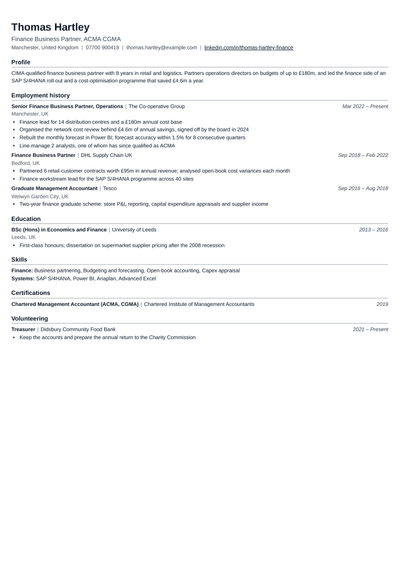
United Kingdom: called a CV, usually up to two A4 pages. No photo, date of birth or marital status. British spelling. A short personal statement at the top, and a line on your right to work if you are not a UK citizen.
United States: one page for early careers, two for senior roles, on Letter-size paper. No photo, age, date of birth or marital status. US spelling. No references on the page.
Canada: one to two pages. No photo or personal details. Volunteer work and Canadian experience are valued, and many employers like a short skills summary near the top.
Germany: the Lebenslauf. A clear, tabular layout with exact dates, often one to two pages. A professional photo is optional but still common. Language levels and certificates matter.
Europe: a clean European CV with language skills rated on the common European scale from A1 to C2. Some public bodies and universities ask for the official Europass format.
UAE and Dubai: usually two pages. Nationality, visa status, languages and a UAE phone number help. A photo is common but not required by most employers.
Singapore: one to two pages, results-led. Many recruiters look for your residency or work pass status. A photo is not needed.
Australia: often two to three pages, with a key skills section. No photo. Referees are commonly listed at the end or offered on request.
US federal jobs: up to two pages under the current USAJOBS rules, with month and year dates, hours worked per week, and series and grade for past federal roles.
Personal details: what to include by country
Leave out almost everything: US, UK, Canada, Australia and Ireland. Name, phone, email, city and LinkedIn only.
Work status matters: Singapore, the UAE and the UK, where recruiters want to know whether you need a visa or pass.
More personal detail is common: Germany and the Gulf, where a photo, nationality and sometimes date of birth still appear, though none is required by law.
Spelling, dates and paper size
Use US spelling and Letter-size paper for the US and Canada, and British spelling with A4 everywhere else. Write dates as "Mar 2023" rather than numbers, because 03/04 means different days in different countries. Add the country code to your phone number, such as +91 for India or +971 for the UAE, so recruiters abroad can call you without guessing.
Cover letters for jobs abroad
UK, European and Canadian employers read cover letters more often than many Indian and US recruiters do. Keep it to one page: why this company, two results that match the role, and your work status and notice period. A short, specific letter often decides between two similar CVs from overseas candidates.
India-specific formats
Some Indian hiring processes have their own expectations, so they get their own templates:
Campus Placement: one page, education first, with scores, projects and positions of responsibility, in the order placement cells expect.
MBA (B-school): the dense, one-page format used in B-school placements, with academics, work experience and achievements in tight rows.
CA Articleship: for CA students, with exam attempts, articleship work areas and software skills.
Public Sector: a formal layout for government and public sector roles, with full education details and exact dates.
How to adapt your resume for another country
Switch the template to the target country. Your content moves across without retyping.
Add or remove personal details such as photo, nationality and date of birth to match local rules.
State your work status: visa, work permit or willingness to relocate, in one line near the top.
Explain local terms: write "8.4 CGPA out of 10" or name the type of company, so a foreign recruiter understands your record.
Convert numbers: show money in the local currency or in US dollars when you mention revenue or savings.
Match spelling and paper size: British or US spelling, A4 or Letter.
Are country templates ATS-friendly?
Yes. Large employers in every one of these countries use applicant tracking systems, and every country template here is marked ATS-safe. Use the job title and skill words from the local job post, since terms differ between countries, and run your file through the ATS resume checker before you apply.
Mistakes people make when applying abroad
Sending a resume with a photo and date of birth to a US or UK employer.
Leaving out visa or work status, so the recruiter has to guess.
Using local abbreviations and company names with no context.
A phone number with no country code.
One resume for every country instead of a version for each.
What is the difference between a CV and a resume?+
In the US and Canada, a resume is a short job document and a CV is a long academic record. In the UK, Europe, the Middle East and much of Asia, a CV is the standard job document. In India, the two terms mean the same thing.
Which countries expect a photo on a CV?+
A photo is still common in Germany and many Gulf countries, though often optional. Leave it out for the US, UK, Canada, Australia and Ireland.
How long should a CV be for jobs abroad?+
One to two pages for most countries. UK and UAE CVs are often two pages, Australian resumes can run to three, and academic CVs are longer still. US federal resumes are capped at two pages.
Should I mention my visa status on my resume?+
Yes, in one line near the top, such as "Eligible to work in the UK, Skilled Worker visa" or "Open to relocation, requires sponsorship". It saves the recruiter a question.
What is a Europass CV?+
Europass is the standard CV format promoted by the European Union. Some public bodies and universities ask for it. Most private employers in Europe are happy with a clean European CV that rates languages on the A1 to C2 scale.
Should I convert my CGPA for jobs abroad?+
Write it with the scale, such as "8.4 out of 10", so it is clear. Avoid converting to another country's grading scale unless the employer asks.
Do I need a different resume for every country?+
A different version, yes, but not a different resume from scratch. Keep one master resume and switch templates. Your content moves across, and you adjust personal details and spelling.
Should I include references on my CV?+
Usually not. Australia is the main exception, where listing two referees is common. Elsewhere, have them ready and share them when asked.
Apply abroad with a resume that looks local
Pick the format for your target country, add your details or upload your old resume, and check your ATS score before you apply.